padsenbeded within their vocal cords added with an extra layer of fatty tissues allows them to vibrate at low frquencies.
What is special about them, the larynx of these animals, Domestic Cats doesn’t appear to need any input from the brain to produce such purring.
It is observed Domestic Cats, Cougar Cougars will usually only purr when it feels safe, comfortable and content. But Caugar’s purr is much louder than Domestic Cat’s.
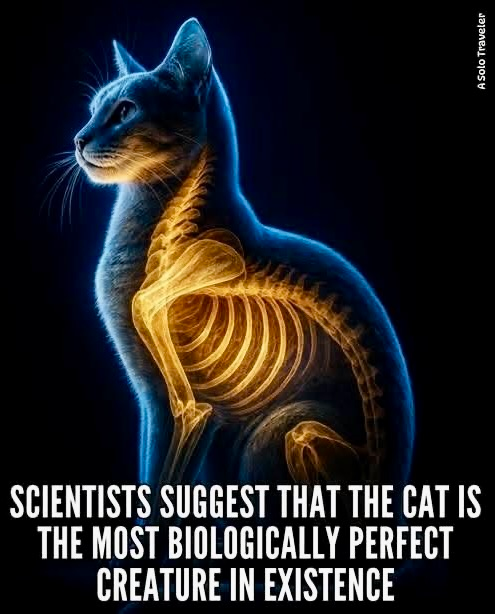
But their brilliance isn’t just physical. Cats move through life with precision and emotional intelligence knowing exactly when to comfort, when to observe, and when to vanish into quiet independence. They’re hunters, guardians, and healers all at once… balancing instinct with intuition in a way few species are able.
What Does “Most Biologically Perfect” Actually Mean?
Researchers aren’t exaggerating for effect calling domestic cats “biologically perfect,”. They’re describing an animal whose body is optimised for efficiency, balance, and survival with minimal energy waste.Scientists claim most species evolve constantly, (do they?) branching out and adapting in dramatic ways to survive changing environments. Cats? They’ve barely changed in millions of years. And that’s not because they’re stuck: it’s because they were designed.
According to research published in Nature Ecology & Evolution, domestic cats have exhibited remarkable evolutionary stability. Their fundamental design has remained consistent because of that simply there’s no need to fix what isn’t “right”. They’ve achieved what biologists call an evolutionary “sweet spot.” It’s sad to note the biologists are giving credit to evolution rather than the designer.